Research
From cell shape and collective motion to biological information and learning.
Mechanics and Morphology of Living Tissues
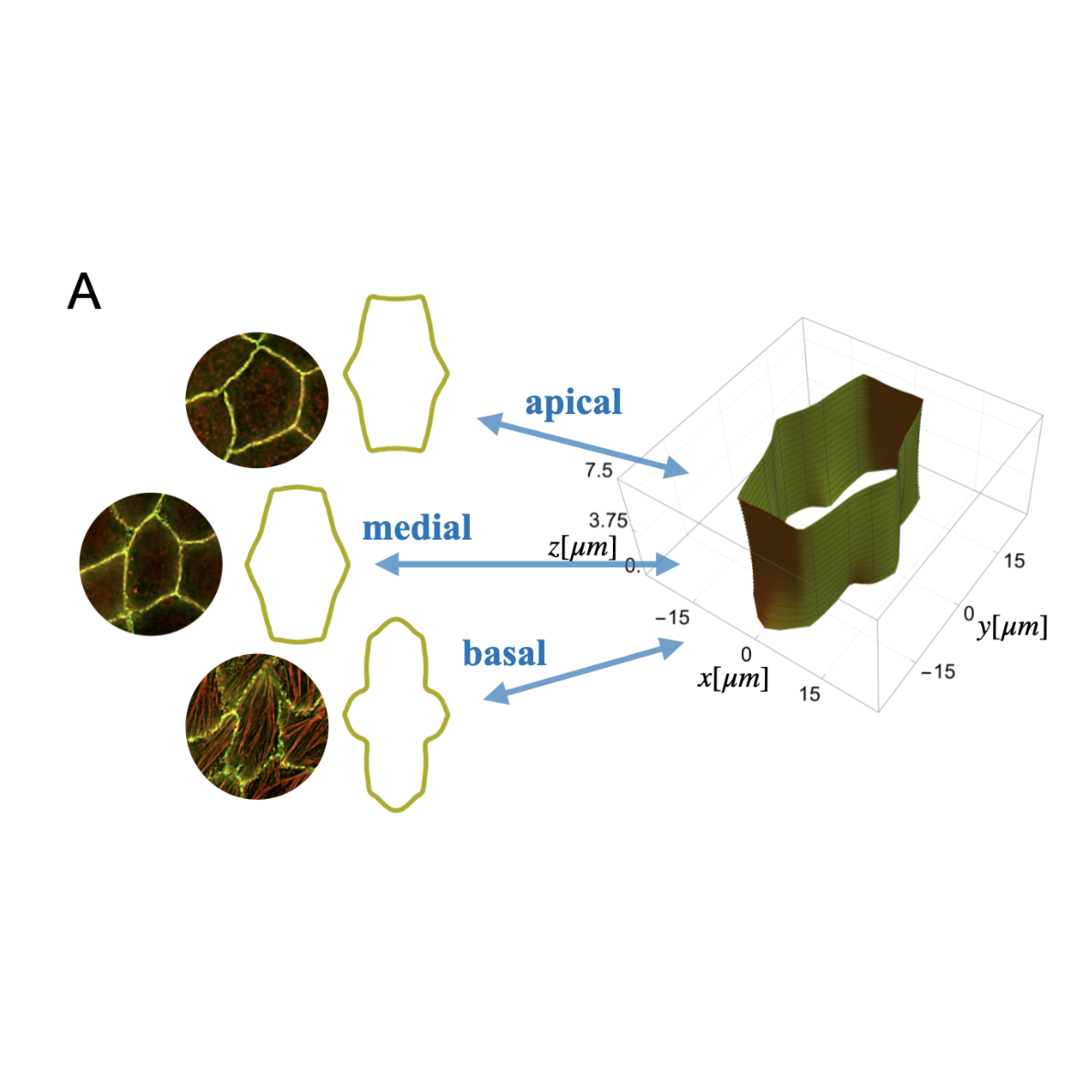
How does an organism build its body as it grows? How do flat sheets of cells fold into organs, tubes, and other three-dimensional structures? These transformations result from forces generated within cells, interactions among neighboring cells, connections to the surrounding substrate, biochemical signaling, and external constraints. Working within the framework of continuum mechanics, I use energy-based descriptions to investigate how these factors determine the geometry of epithelial sheets.
My research extends current theories of epithelial mechanics by accounting for the material properties and internal composition of individual cells. I also study how cells are mechanically coupled to their neighbors and to their substrate, including through fiber bundles that transmit forces across these interfaces. From this cell-scale description, I develop tissue-level models to explore how epithelial sheets fold, heal, and fail.
Active Matter Far from Equilibrium
Active matter is composed of units that continuously consume energy and convert it into motion or mechanical stress. Because energy is injected locally, these systems do not relax toward equilibrium. Instead, they can sustain flows, generate forces, and organize themselves into dynamic structures. Living systems—from molecular motors to swimming microorganisms—provide some of the clearest examples, making active matter a central topic in modern nonequilibrium physics.
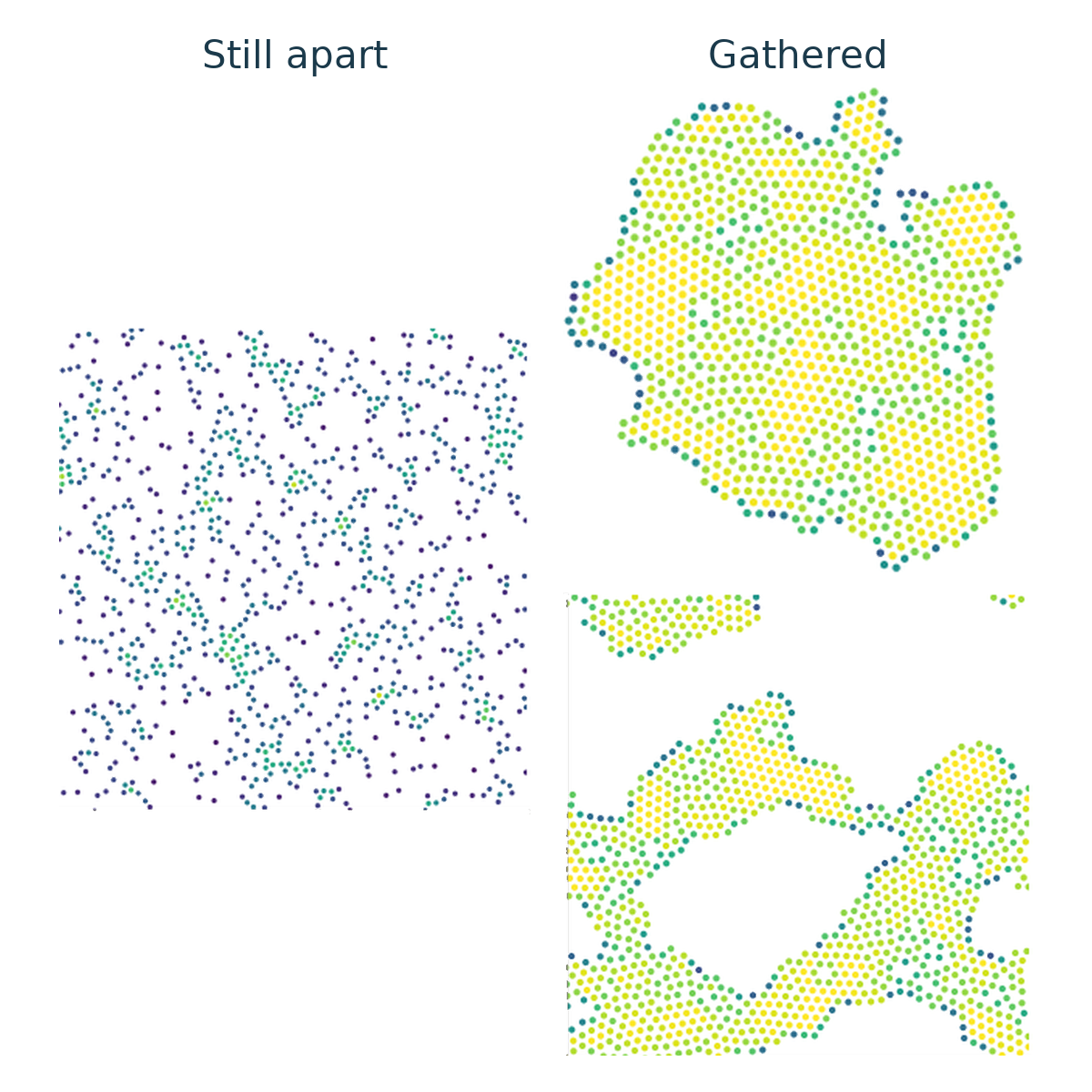
My research uses this framework to understand how interactions at the cellular scale produce organization at much larger scales. In some bacterial systems, for example, cells can influence one another before making contact: deformations of the surrounding thin liquid film produce interactions that cannot be explained by crowding alone. I use continuum and kinetic theories to connect these microscopic mechanisms to the structures and dynamics observed across the system.
Collective Behavior: Information, Search, and Survival
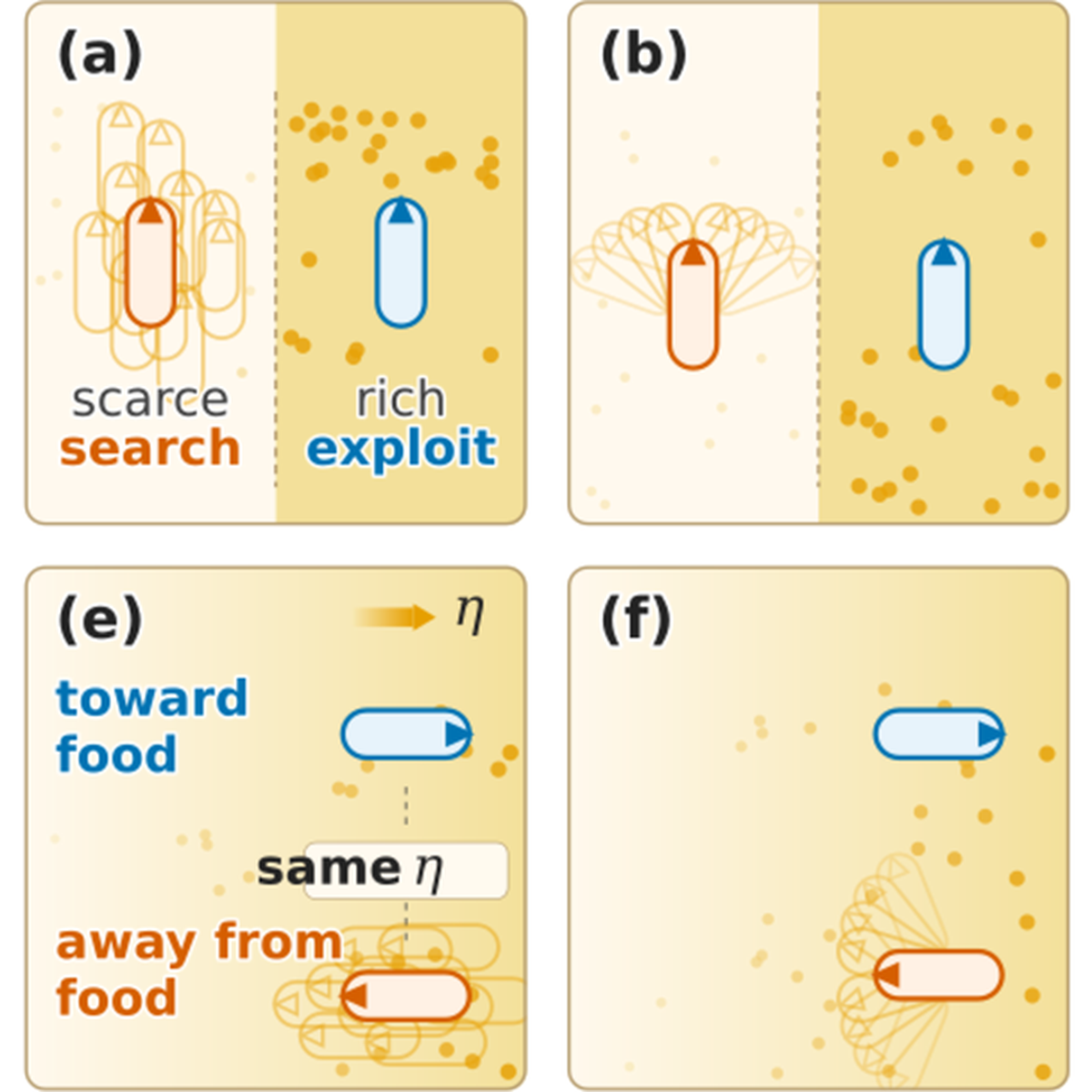
Living cells rarely act alone. They form communities that assemble, search, and persist in ways no single cell can achieve. At the population level, interactions among cells and with their environment create new ways of gathering information, using resources, and adapting to change. I study how evolution shapes these collective strategies through mathematical models based on optimization and information theory. Quantitative experiments motivate my hypotheses and provide observations against which I test their predictions.
My research asks what forces bring cells together and whether aggregation can protect a population from extinction caused by fluctuations in birth, death, or movement. I also investigate how groups forage in different environments, balancing the use of known nutrient sources with the exploration needed to learn about their surroundings.
Rethinking Science and Engineering Education with AI
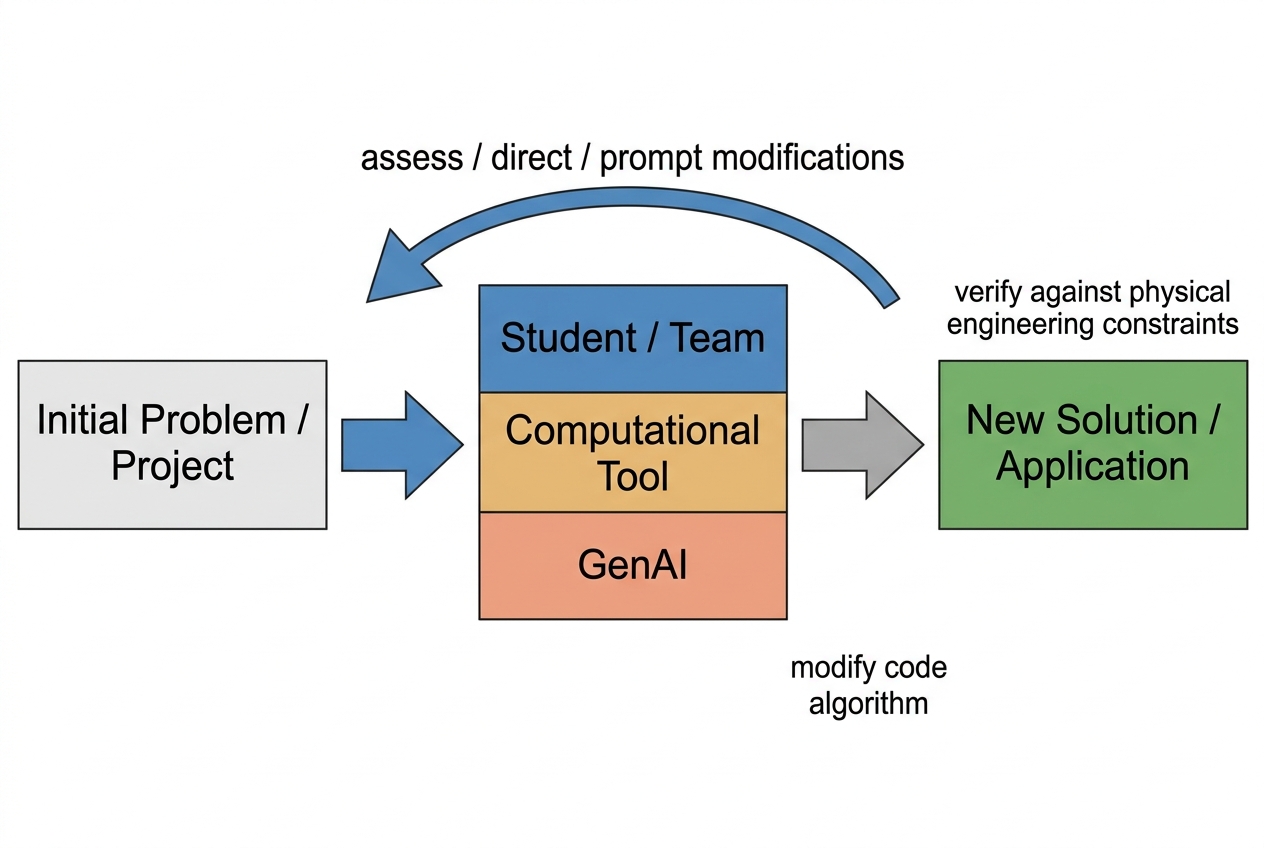
Generative AI is changing what it means to teach and learn science and engineering. It can make feedback more immediate, dialogue more accessible, and exploration more open-ended. Yet an answer can arrive before understanding. The challenge is to use AI to strengthen curiosity, judgment, and scientific reasoning without replacing the effort through which these abilities develop.
As part of UIUC’s Strategic Instructional Innovations Program (SIIP), I study how different forms of engagement—from working without AI to using it as a collaborator—shape the learning process. I am interested in how AI can help students ask better questions, test ideas, receive timely feedback, and reflect on what they do and do not understand. This means designing experiences that support independent practice and the application of knowledge to new problems while requiring students to question the model, verify its output, and defend their conclusions on their own.